You Never Win Freedom. You Defend it.
Updated


In a time when government overreach has blurred the boundaries of personal autonomy, ICAN lead counsel, Aaron Siri, Esq., is executing a legal strategy that lights the path forward with unwavering clarity.
When he recently appeared on The HighWire, I couldn’t help but nod along, and even talk back to the screen, as he delivered one logical, insightful, and well-articulated point after another.
He joined Del to unpack ICAN’s latest victory in West Virginia, a preliminary injunction that allows four students to attend school with religious vaccine exemptions, and reminded us that this fight isn’t about politics. It’s about principle.
“Rights are never won and lost. They are in a constant, eternal battle against those who want to take them away from you. You never win the war. You just have to fight.”
This isn’t theory; it’s hard-earned truth from a man who has spent years in the trenches of vaccine lawfare, taking on state agencies, school boards, private industry, and now finds himself having to contend even with the ACLU, an organization once renowned for defending individual rights, now working to keep unvaccinated children out of school.
The West Virginia win isn’t just a case about those specific plaintiffs, nor is it only relevant to families seeking exemptions. It’s a microcosm of what’s wrong with public health today: bureaucracy steamrolling liberty in the name of compliance.
While the governor issued an executive order in support of religious exemptions, and the state health department backed it, the unelected Board of Education refused to comply. The result? Legal chaos. Families in limbo. And ICAN’s legal team in court, doing the work they do best.
But Aaron Siri isn’t just focused on this case. He’s sounding the alarm about the broader assault on bodily autonomy, the weaponization of mandates, and the rise of a pharmaceutical-industrial complex that’s more concerned with market share than public health.
He breaks it down in simple economic terms: It’s cheaper for pharmaceutical companies to lobby for mandates than it is to persuade people to choose their products voluntarily. And the data shows it.
“Back in the early 80s, the vaccination rate in this country for the only three routine vaccines at that time was in the 50 to 60 percentage points… Here we are [today], they’re at well over 90%, often, and yet they decide that they need to crush [rights].”
He dismantles the idea that mandates are rooted in science or safety. Kicking kids out of school doesn’t protect anyone. It only serves to disenfranchise families. Siri continues:
“These kids, they don’t disappear when they’re kicked out of school… They’re going to ballgames. They’re going to the market. They’re going to the playgrounds. They’re meeting in homeschool pods… You’re creating a cluster of 100 unvaccinated kids.”
If this were truly about disease prevention, the policies would make no sense. It’s not about science. It’s about belief.
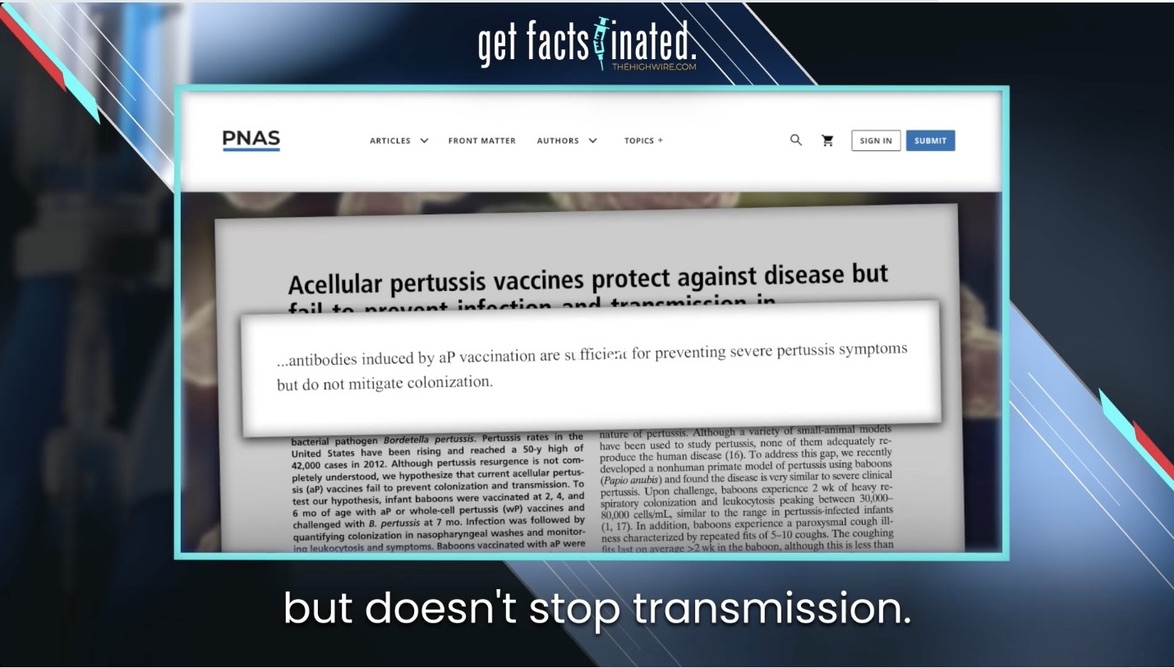
“You believe the pertussis vaccine stops transmission, even though the evidence shows it’s the opposite. Because it’s your belief, it’s no different than a religion. But the thing is, they want to replace the religious beliefs of these parents with their religious beliefs.”
Like Del always says: if you’re not allowed to question it, it’s not science, it’s a religion.
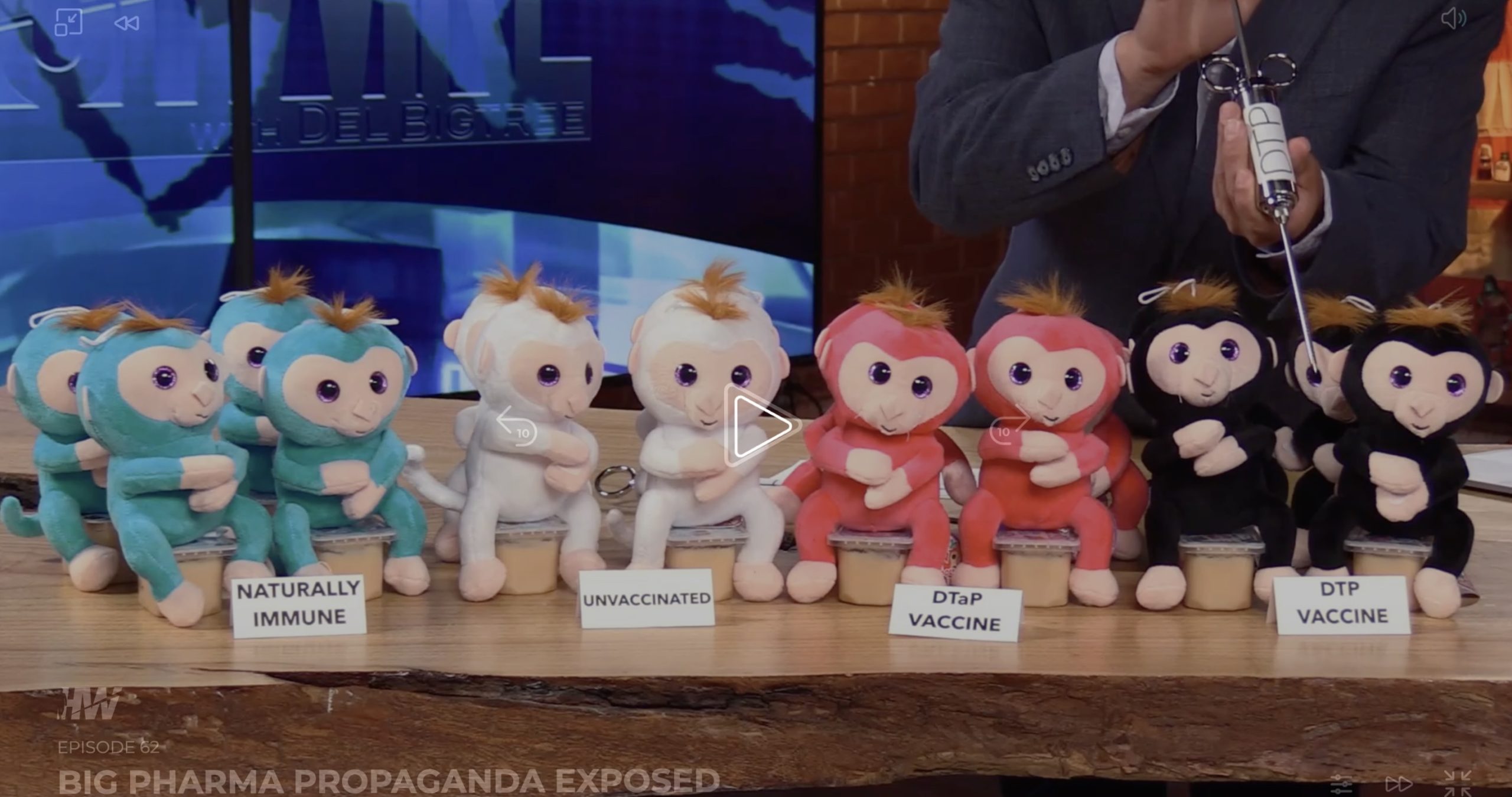
That belief system is backed by institutions like the American Academy of Pediatrics (AAP), which has campaigned to eliminate all non-medical exemptions, even though compliance is already sky-high.
“Almost everybody in this country, most kids, get these products, even in the states that have check-the-box exemptions, which is about 45 of them. They still have a far above 90% vaccination rate.”
So what exactly are they fighting for? A few extra percentage points of control?
“What do people do when you take away their rights? When you throw their children out of school… what do you think that does to those parents? It turns them into lifelong advocates who are going to fight these products. And they’re just products.
“And if the AAP were smart and they wanted to protect its holy grail — its products — from being ‘quote-unquote’ politicized, it would stop politicizing the products. And the way that it politicizes them is by taking away people’s rights, forcing them to get them – that they don’t want.”
It’s this clarity that makes Aaron Siri’s words resonate. He isn’t angry. He’s focused. He’s dismantling institutional dogma with one truth at a time:
“This is not about health. If they cared about health, they’d care about the chronic disease epidemic they have overseen in the last 40 years; the largest decline in childhood health in recorded human history.”
That line deserves to be etched into the consciousness of every legislator, every physician, every parent: the largest decline in childhood health in recorded history.
And yet, the system shrugs.
“You don’t hear them talking about that… raising the national alarm about that. You know why? Because as that chronic disease line goes up, so do the profits of their members. They’re a trade organization; they’re not a medical organization. They’re there to assure the profitability of their members.”
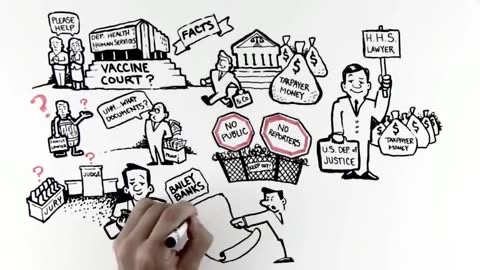
Del reinforced this by breaking down the dysfunction of the Vaccine Injury Compensation Program (VICP), a system designed not to protect families, but to shield pharmaceutical companies from liability.
“You go to this court that has no jury. It doesn’t even have a judge. It has a special master.”
Victims must prove their case using science that doesn’t exist, because the very agency responsible for the injury refuses to do the studies.
“The science has to have been done basically by HHS themselves, and they’re refusing to do the science… it’s like having a murder case where the murderer does all the forensics.”
For a powerful visual breakdown of how this system works (and fails), watch this short video narrated by Rob Schneider. It explains the secretive vaccine court, how it protects manufacturers from liability, and why so many injured families are left without justice.
HHS Secretary Robert F. Kennedy Jr. seems to agree. In a powerful statement on X, he described the VICP as having devolved into:
“A morass of inefficiency, favoritism, and outright corruption.”
And pledged:
“The VICP is broken, and I intend to fix it. I will not allow the VICP to continue to ignore its mandate and fail its mission of quickly and fairly compensating vaccine-injured individuals.”
But Aaron knows better than to celebrate too early. He offered a warning that every activist, parent, and citizen should take to heart:
“Rights are never won and lost. They are in a constant, eternal battle against those who want to take them away from you. You never win the war. You just have to fight.
“I had a young attorney ask me at the firm, ‘Well, when we win this thing…’ I said, ‘You don’t win this thing. You never win. When I’m long gone, you keep fighting. Alright? That’s what needs to happen.’ Because there’s always going to be those who come to take away your rights. You just gotta constantly push back.
“And this right, the right to bodily autonomy when it comes to medical interventions, the right to say no, is a true fundamental right. We’ve talked about it many times, and we’ve constantly got to be fighting back against the government and those forces that want to take that right away.
“So there’ll never be a nail in the coffin; it’s like the pendulum. We might be able to get it so far down the other side, seems like they’re dead. But never underestimate the Phoenix rising.
“The time to be most cautious and careful about one’s rights is actually when you’ve secured them… When I’m long gone, you keep fighting.”
Aaron Siri may be one man, but his words echo the spirit of a movement: calm, clear, relentless.
Thanks to ICAN, and voices like his, and supporters like you, we’re not just on defense anymore.
Why this matters to me:
As a mother of a vaccine-injured child, this isn’t theoretical. My daughter is 14 years old. She’s still in diapers. She can’t walk on her own. She can’t speak. She needs help with every basic human function–from eating to bathing to being moved from one room to another.

She screams. Sometimes in pain. Sometimes in frustration. Sometimes, I think, in grief. Grief for a body that won’t cooperate. For a life she was meant to have but never got the chance to live.
We grieve that life, too. The one where she could run, speak, make friends, thrive in school, tell us what hurts, what she loves, what she dreams. That life was stolen. And no one was ever held accountable.
Meanwhile, the world argues over data points and policies. They debate correlation and causation, and neurodiversity, like children like mine don’t exist. And the very systems that were supposed to protect her–health agencies, lawmakers, doctors–have turned their backs. They write her off as collateral damage.
This is why ICAN’s work matters. It’s why Aaron Siri’s legal battles matter. Because someone has to speak for the children who can’t. Someone has to fight for the families left to carry the weight. Someone has to expose the truth that powerful institutions would rather bury.
If you’re reading this in The Informant, you’re already part of that fight. As a recurring donor, you are standing with us. Thank you. You may never meet the children you’re helping, but you’re changing their world–and ours.
Working for ICAN gives me something I never thought I’d feel again: purpose. It gives meaning to the heartbreak. A place to channel the fire. Every day, I wake up knowing I’m part of something that matters.
It doesn’t erase what happened to my daughter. Nothing ever could. But it softens the sting. Because her life, however limited, has given our family a mission. Her pain lit a fire. Her silence gave me a voice.
That’s the silver lining. We didn’t choose this path. But we choose to fight.
We’re not just fighting back, as all of us in this movement have been doing for years; we’re finally gaining ground.
In Mississippi, a historic court win secured permanent religious exemptions for school entry. After decades of legal lockout, families there finally have a choice.
ICAN has challenged discriminatory vaccine mandates in California, and Aaron Siri and ICAN continue to put unconstitutional policies on notice.
These aren’t just symbolic victories. They’re restoring rights. Rewriting precedent. And giving hope to families who’ve spent years being ignored and excluded.
Across the country, doors once slammed shut are starting to open. Courts are listening. Lawmakers are shifting. Conflicts of interest and corruption are being exposed. The tide is turning, and ICAN is driving that change. This is why we’re called “America’s Public Health Watchdog.”
There’s a reason Del asks for support each week on The HighWire. This kind of legal and advocacy work doesn’t fund itself. There’s a reason you don’t hear ads on the show. A reason ICAN built its own censorship-proof platform to stream it. This movement is powered by people, not corporations.
Right now, every dollar you give to ICAN goes twice as far. A generous donor is matching every contribution, up to $600,000, until the end of September.
Phase Two of The HighWire campus is also underway. You can dedicate a brick, plaque, or bench on The Terrace next to The HighRoad.
A dear friend gifted our daughter Lily a brick during Phase One. Seeing it in person, alongside thousands of others, was like walking through sacred ground.
It’s a place of reflection, where you feel like you’re not alone, and if you give, you’re invited to visit and see your mark on this movement in person.

We all contribute in the ways we can. Some of us share. Some of us show up. Some of us give.
Big Pharma will always have more money. But they will never have more heart. And they will never have what we have: the truth, the unbreakable will to fight, and a community that refuses to give up, sit down, or shut up.
Every bit of progress we’ve made is because of people like you.
If you’re able to give again, please do. For my daughter, for every child like her, for every family still fighting.
Because, like Aaron said—
You never win freedom. You defend it.